
Why Your Window Screens Keep Bowing, Tearing, and Popping Loose in Dallas Heat
I've been fixing window screens around Dallas for a long time, and I can usually tell what's wrong with one before I even touch it, just by looking at where it's torn and how the frame is sitting in the track. Screens take more abuse in this part of Texas than almost anywhere else I've worked, and it's not because people are rough on them. It's because North Texas throws three separate things at a screen that most climates never really deal with together: shifting clay soil that twists the whole window opening, spring hailstorms that show up out of nowhere and shred mesh in about ten minutes, and summer heat that just cooks standard fiberglass until it's basically potato chip material.
If you've had a screen pop out of its frame for no obvious reason, or you've noticed one bowing outward like it's trying to escape the window, or you pulled a screen out this spring and found it crumbling in your hands, you're not imagining things and you're definitely not alone. This is a genuinely common set of problems here, and once you understand what's actually causing each one, the fix usually isn't complicated. Let's get into it.
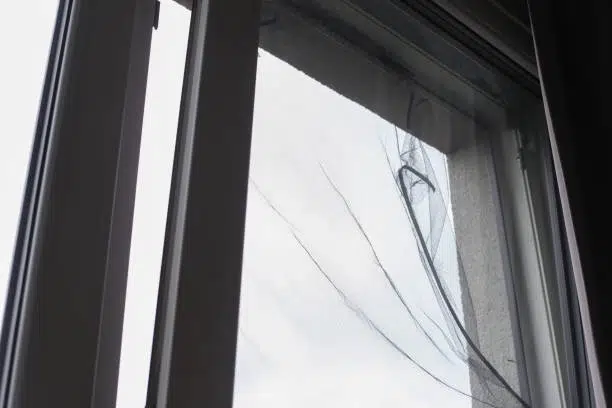 Standard fiberglass mesh degraded and torn by intense Dallas UV heat and sudden spring hailstorms.
The Black Prairie Clay Problem Nobody Talks About
Most people think their window screen failed because the mesh got old or a kid leaned on it too hard. Sometimes that's true. But a huge number of the screen calls I run across Dallas, out in Lakewood, over in Preston Hollow, up around Lake Highlands, aren't really screen problems at all. They're foundation problems wearing a screen shaped disguise.
Dallas sits on a lot of expansive Black Prairie clay, and that soil does something most homeowners never think about until it starts causing trouble: it swells up when it gets wet and shrinks back down when it dries out. That cycle repeats every single year, sometimes multiple times a year depending on how our rain shows up, and it puts real, ongoing stress on a home's foundation. Even a small shift, sometimes less than the width of a pencil, is enough to twist the window opening itself just slightly out of square.
Here's why that matters for your screen specifically. A screen frame depends on sitting inside a true, square channel to hold its tension correctly. Once that opening warps even a little, the frame no longer seats evenly, and you start seeing exactly the symptoms I mentioned earlier: a screen that pops out of one corner repeatedly no matter how many times you push it back in, a rubber spline that snaps because it's being forced to hold tension at an angle it was never designed for, or a frame that looks bowed even though the mesh itself is perfectly fine.
This is one of the trickiest issues to diagnose over the phone, honestly, because the mesh can look completely fine while the underlying frame is the actual culprit. It's why I always tell people describing this exact problem that a quick in person look usually saves everybody time and money compared to guessing.
What makes this especially frustrating for homeowners is that the shift usually happens slowly enough that nobody notices it in real time. You don't wake up one day to a dramatically crooked window frame. It's a gradual thing, a fraction of an inch here, a fraction there, spread out over a few wet and dry cycles across a year or two. By the time it shows up as a screen that won't stay seated, the actual foundation movement that caused it has usually already been happening quietly for a while. Homes on the older side, particularly a lot of the classic properties around Lakewood and East Dallas, tend to show this more than newer construction, simply because they've had more years for that clay cycle to work on them. That said, I've seen plenty of newer builds out in Frisco and Plano with the exact same issue, since fast growing clay soil doesn't really care how old your house is.
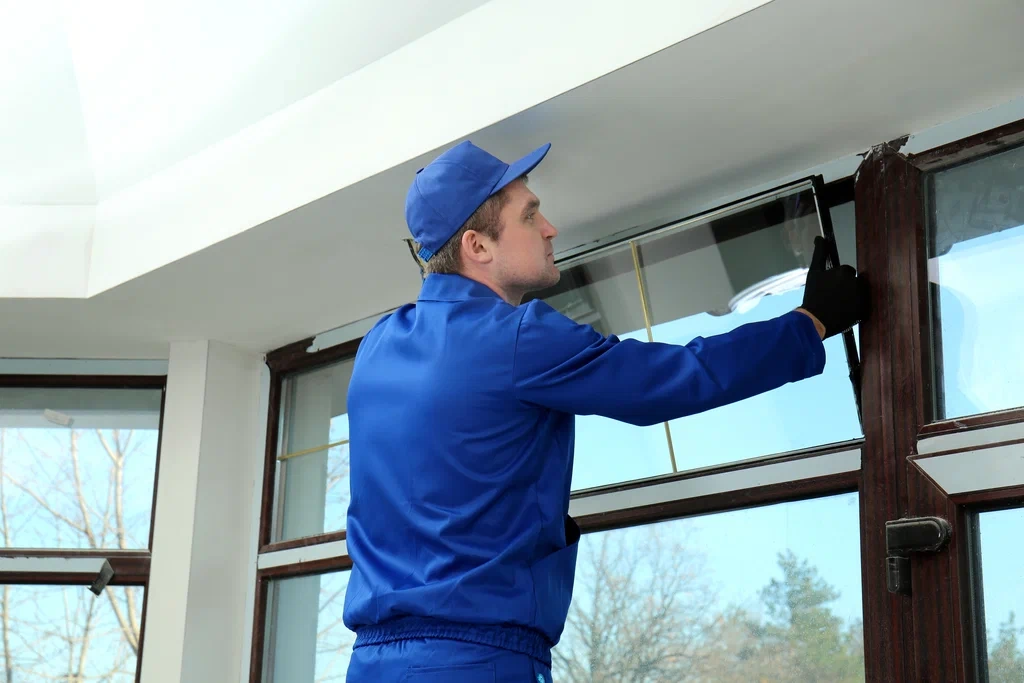
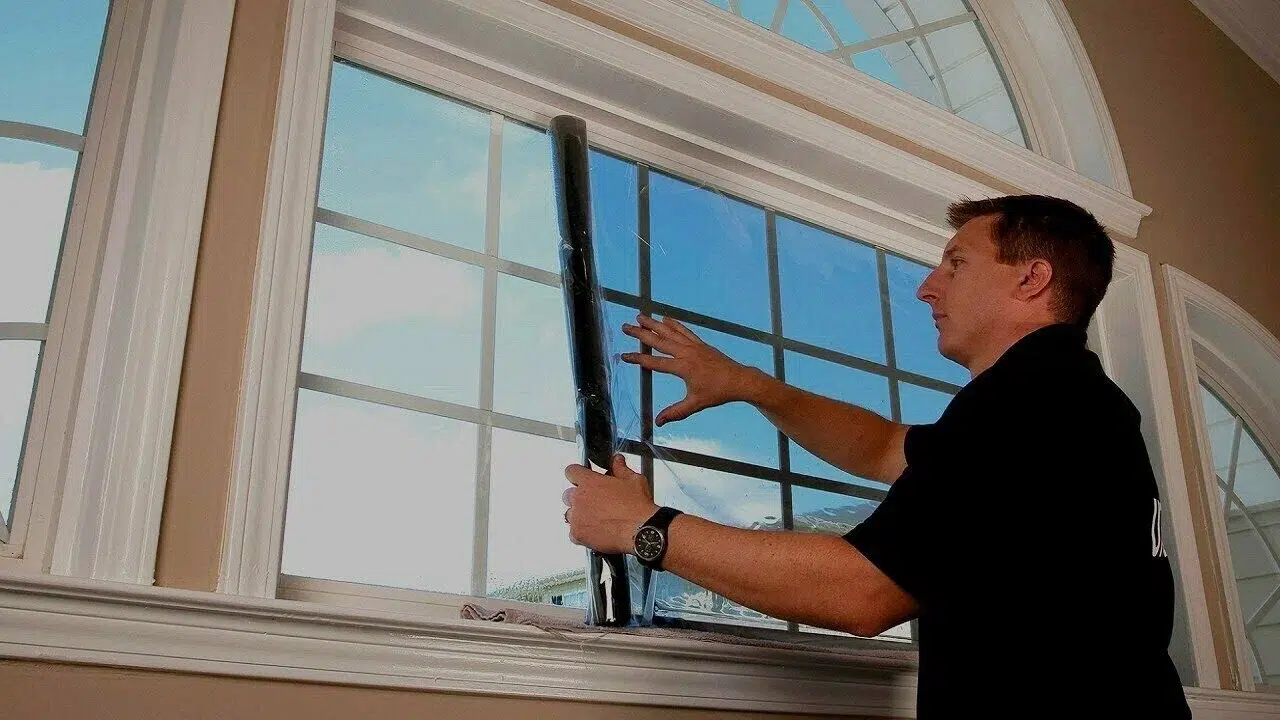 Fitting a custom heavy-duty solar screen frame to restore proper fit and block solar heat gain.
Spring Hailstorms and What They Actually Do to a Screen
If you've lived in North Texas through even one spring, you already know what a supercell can do. Those storms roll through fast, and they bring genuinely damaging hail alongside straight line winds that can hit surprisingly hard. A standard fiberglass window screen has basically zero defense against either one.
Hail impact tears fiberglass mesh in a very specific way, usually leaving small, roughly circular punctures scattered across the screen rather than one big rip. Individually those little holes don't look like much, but collectively they let in a lot of dust, pollen, and bugs, and they weaken the mesh structurally around each puncture point, which means the screen tends to keep tearing further even after the storm has passed. Wind adds a second layer of damage on top of that. A strong enough gust can bend a lightweight aluminum screen frame right at the corners, especially on older frames that have already been weakened by UV exposure or that clay soil shifting we just talked about.
I get a wave of calls every spring right after a bad storm system rolls through, and it's almost always the same story: someone walks outside the next morning, and a screen that was totally fine the day before now looks like it went through a war. If you're dealing with that right now, you're definitely not the only one, and the cost to rescreen windows after storm damage in Dallas is usually a lot more manageable than people expect, especially compared to what a lot of homeowners assume it'll run.
| Storm Damage Pattern | What Caused It | Typical Fix |
|---|---|---|
| Scattered small punctures | Direct hail impact | Rescreen with fresh mesh, frame usually reusable |
| Bent or crumpled corner | High wind pressure on a weakened frame | Corner repair or, if severe, full frame rebuild |
| Frame popped out of channel | Wind combined with an already shifted opening | Reseat frame, check channel alignment first |
The Slow Cook: How Dallas Summer Heat Destroys Standard Mesh
Even without a single storm, a Dallas summer alone is enough to kill a cheap screen. We routinely sit above 100 degrees for weeks at a stretch, and standard fiberglass mesh just wasn't built to handle that kind of sustained UV and heat exposure year after year.
What happens is a slow chemical breakdown in the fiberglass strands themselves. Early on, you'll notice the mesh fading to a chalky, washed out color, and it starts feeling stiffer than it used to. Keep cooking it for another summer or two and the fibers actually become brittle, to the point where you can rub a finger across the screen and watch tiny bits flake off. At that stage, it doesn't take a storm or an accident to tear it. A strong gust, a curious pet, or even just the screen flexing in normal wind is enough to open a hole. West and south facing windows take the worst of it, since they catch the most direct afternoon sun, and if you've ever wondered why do window screens bow or sag in Dallas heat specifically on those exposures, this is exactly why: the mesh loses its structural integrity from the sun long before most people notice anything's wrong.
The upgrade that actually solves this long term isn't complicated. Heavy duty solar screen mesh is woven denser and treated specifically to resist UV breakdown, which means it holds its color, its flexibility, and its strength for years longer than standard fiberglass in the exact same sun exposure. It also has a nice side benefit: it blocks a meaningful amount of solar heat before it ever hits your glass, which takes some of the load off your AC on the worst afternoons.
| Mesh Type | Heat and UV Resistance | Best For |
|---|---|---|
| Standard fiberglass | Moderate, degrades faster on sun facing windows | Shaded or east facing windows, budget projects |
| Heavy duty solar screen mesh | High, engineered for sustained heat exposure | West and south facing windows, Dallas summer sun |
| Pet resistant polyester | Good, more durable than standard fiberglass | Homes with active dogs or cats near the screen |
A Quick Way to Check Your Own Screens
Before you call anyone, here's a simple walkthrough you can do yourself in about ten minutes that'll tell you a lot about what's actually going on.
- Look at the mesh up close. Run a finger gently across it. If it flakes, crumbles, or feels brittle rather than flexible, UV breakdown has already set in and it's time for a fresh rescreen.
- Check how the frame sits in the channel. Push each corner gently. If one corner consistently pops loose while the others stay put, that's pointing toward a shifted window opening, not a bad screen.
- Look for small, scattered holes. A cluster of little punctures rather than one big tear usually means old hail damage that's been slowly getting worse.
- Press the center of the mesh. It should feel reasonably taut. A lot of give or an obvious bow usually means the spline has loosened or the frame tension has failed.
If you're seeing more than one of these signs at once, that's a strong hint your problem is bigger than a single torn screen, and it's worth having someone actually look at the frame and the window opening together rather than just replacing mesh and hoping it holds.
Repair, Rescreen, or Full Rebuild
Not every damaged screen needs the same level of work, and knowing the difference saves you real money.
A straightforward rescreen, meaning the existing frame is still square and undamaged and you're just replacing torn or sun damaged mesh and spline, is the most common and least expensive fix. It's usually what's needed after typical UV wear or an isolated storm puncture. A frame repair becomes necessary when a corner has bent or cracked, often from wind or years of expansion and contraction, but the rest of the frame is still solid. A full custom rebuild is the right call when the frame has warped badly enough that it no longer sits correctly in the window channel at all, which, as we covered earlier, often traces back to that foundation shift rather than the screen itself.
If you've been searching window screen repair near me or window screen fix near me trying to figure out which category your situation falls into, that's honestly the hardest part to judge from a photo or a phone description. A short in person look almost always sorts it out fast.
DIY Rescreening: When It Works and When It Doesn't
I'm not going to tell you that rescreening a window is some impossible task that only a professional can handle. A basic, square frame with straightforward mesh damage is genuinely doable as a weekend project if you've got the patience for it and a spline rolling tool. Pull the old spline, lay in fresh mesh with a little overhang, roll the new spline into the groove with steady pressure, and trim the excess. That part isn't rocket science.
Where DIY runs into trouble around here is exactly the stuff we've been talking about. If the frame itself has warped from foundation movement, no amount of careful spline rolling is going to make a twisted frame sit flush in a channel it no longer fits. People end up fighting the same saggy, popping screen for a whole afternoon, not realizing the mesh was never the actual problem. Bent aluminum corners from wind damage are another spot where DIY tends to fall short, since straightening a corner back to true square without the right tools often just weakens it further or leaves a visible kink. And custom sized or oddly shaped windows, which show up a lot in older Dallas neighborhoods with unique architecture, usually need a frame built to exact measurements rather than a generic hardware store kit.
My honest rule of thumb: if it's a simple tear or sun damaged mesh on a frame that still sits square, go ahead and give it a shot yourself. If the frame won't sit right, if a corner is bent, or if you've already tried rescreening once and it's back to the same problem within a few months, that's the signal to bring in someone who does this every day.
Frequently Asked Questions
How can I tell if my screen problem is really a foundation issue?
The biggest clue is a pattern. If one specific corner of a screen keeps popping loose over and over, even after you've reseated it, or if the frame visibly doesn't sit flush in the channel on one side, that points toward the window opening itself being slightly out of square rather than a simple mesh problem. A technician can usually confirm this in a couple of minutes by checking how the frame fits against the channel.
Is it worth upgrading to solar screen mesh after storm damage?
If you're already replacing torn mesh from hail or wind, it's a smart time to consider it, especially on west or south facing windows that take the most direct Dallas sun. You're paying for the labor either way, so the added cost is really just the material difference, and you get a screen that holds up far longer against both UV breakdown and everyday wear.
What's the best heavy duty solar screen mesh for Dallas homes specifically?
For our climate, look for a densely woven solar mesh rated for high UV exposure rather than a generic sun shade product. It should feel noticeably sturdier than standard fiberglass right out of the package. West facing windows in neighborhoods like Highland Park, University Park, and Oak Lawn benefit the most from this upgrade, since those homes tend to take the harshest afternoon sun exposure across a typical Dallas summer.
Do you serve areas outside Dallas proper, like Plano, Frisco, or Richardson?
Yes, we regularly work throughout Plano, Frisco, and Richardson along with the rest of the greater Dallas metro. The same clay soil, hail exposure, and summer heat patterns affect homes across the whole area, so the diagnosis and repair approach stays consistent no matter which side of town you're on.
However your screens ended up damaged, whether it's a foundation shift twisting the frame, a spring storm that came through fast, or a decade of Texas sun finally catching up with the mesh, the fix is almost always more straightforward than it looks from the outside. If you want an honest, in person diagnosis rather than a guess, our team handles window screen repair Dallas homeowners have relied on for years, from simple rescreens to full custom frame rebuilds.

Why Your Window Screens Keep Bowing, Tearing, and Popping Loose in Dallas Heat
Why Your Window Screens Keep Bowing, Tearing, and Popping Loose...

Window Screen Repair Dallas: Keeping Mosquitoes Out and Pets Safely In
Window Screen Repair Dallas: Keeping Mosquitoes Out and Pets Safely...
Sliding Glass Door Roller & Track Replacement in Dallas, TX: The Complete Homeowner’s Guide
Sliding Glass Door Roller & Track Replacement in Dallas, TX:...
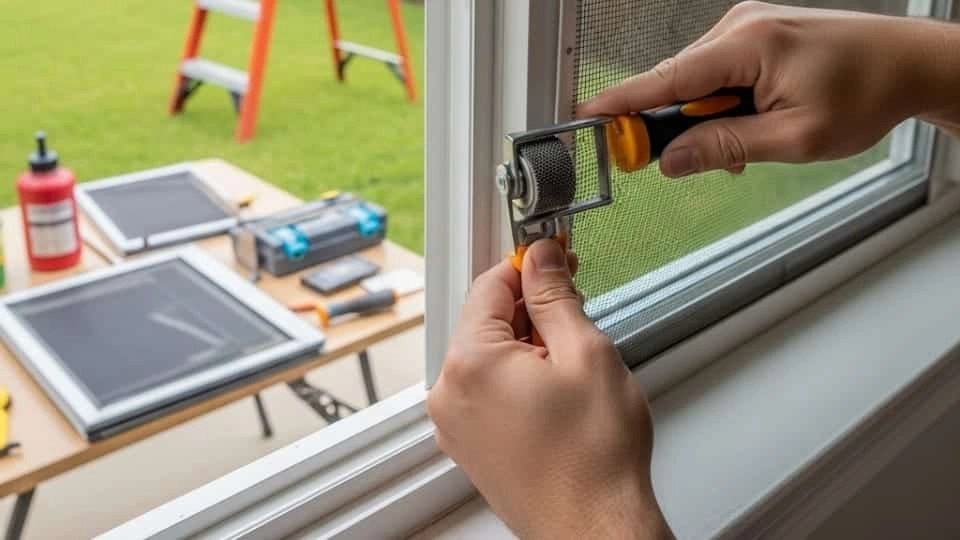
Window Screen Repair Dallas: Durable Mesh Solutions
Window Screen Repair Dallas: Durable Mesh Solutions By...
Patio Door Latch & Lock Security Upgrades for Dallas Homeowners
Patio Door Lock Repair Dallas: Latch & Security Fixes Patio...
Beat the North Texas Heat: Commercial-Grade Door Weatherstripping Repair in Dallas
How Dallas Foundation Shifts Impact Your Windows & Need Repair...
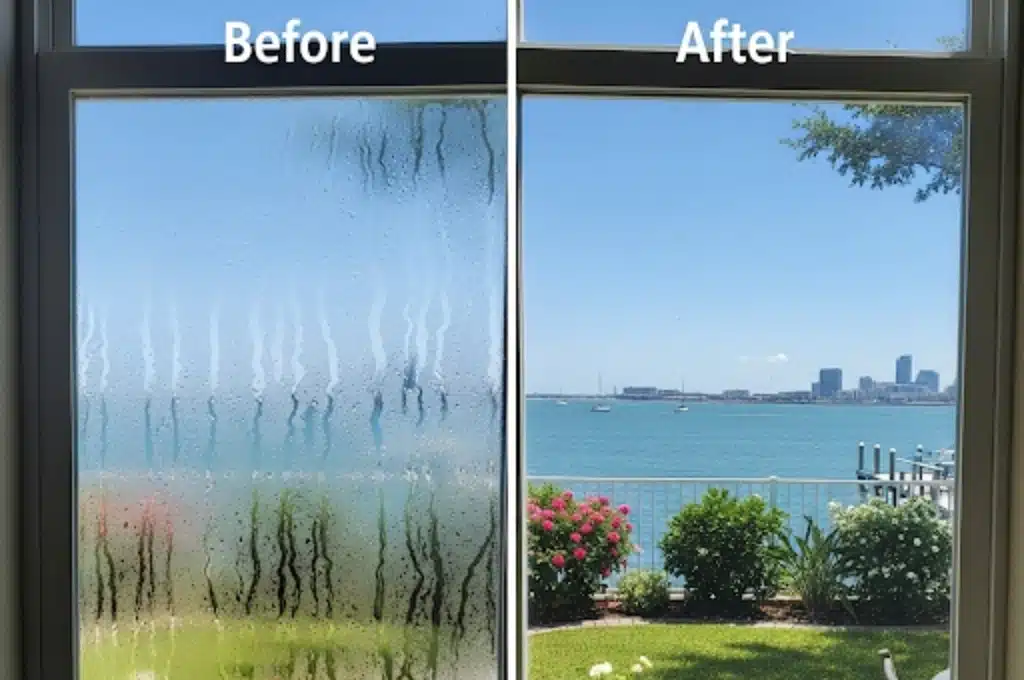
Foggy Window Repair in Dallas: When to Replace the Glass vs. the Whole Unit
How Dallas Foundation Shifts Impact Your Windows & Need Repair...
How Dallas Foundation Shifts Impact Your Windows (And How to Fix Them)
How Dallas Foundation Shifts Impact Your Windows & Need Repair...
Sliding Glass Door Roller Replacement Dallas
The Complete Guide to Sliding Glass Door Roller Replacement in...